![sw safety LOGO[99].png](https://static.wixstatic.com/media/356f01_cd4584ad309f43b49a879891bb78900a~mv2.png/v1/fill/w_967,h_469,al_c,q_90,enc_avif,quality_auto/sw%20safety%20LOGO%5B99%5D.png)
'The wildfire smoke is causing bad air quality.' As a construction superintendent, 'at what point do we stop work and send workers home?'

Updated: Jul 24
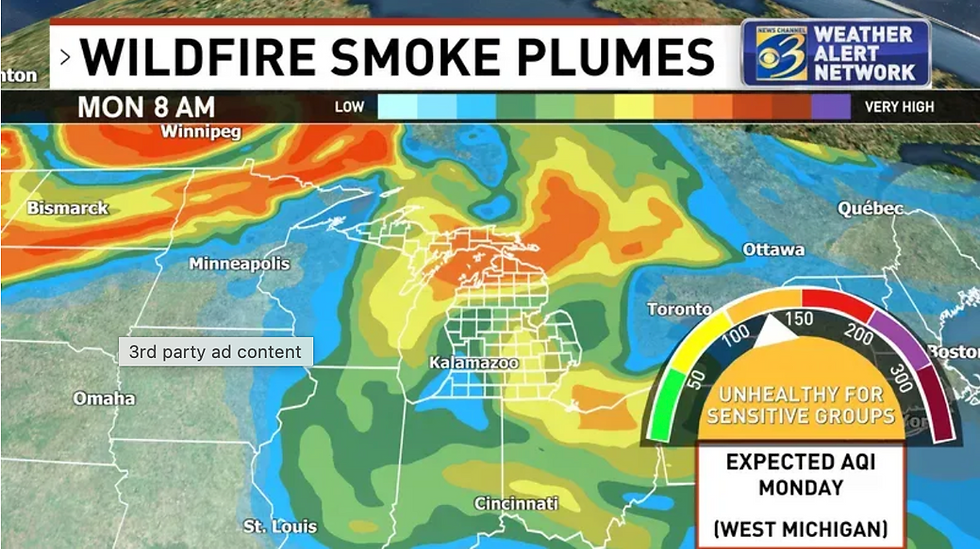
Construction wildfire smoke wasn't something I expected to be answering questions about. It caught me off guard too. And what was especially uncomfortable was that I didn't know how to answer it. I couldn't find any OSHA regulations for my State (Michigan).
Then a really smart company did something I learned a lot from. They called an emergency safety committee meeting to discuss.
As their 3rd party safety professional, I was invited to contribute. We discussed many things related and were trying to figure out the right thing to do that was practical. By the end of this meeting, they decided to do the following:
Step 1: Monitor current local Air Quality Index Scale (AQI)
What is AQI?
It’s a weather report for the air. The higher the number, the dirtier the air and the unhealthier.
How can I monitor the air?
Many states have air quality dashboards that can give you region or even local specific AQI.
For example, in Michigan we use: https://egle.maps.arcgis.com/apps/dashboards/6f20c92fd42048bea88e7d0ad1f2ff07#

What does it mean?
· 0 - 50: Good air
· 51 - 100: Air is okay
· 101 - 150: Some people may feel it, especially if they breathing problems
· 151 - 500: The air is unhealthy
· Above 500: The air is extremely hazardous
Step 2: Take practical steps to reduce construction wildfire smoke exposure using the hierarchy of controls
1. Limit or reschedule outdoor work when possible
2. Move work to areas with cleaner air
3. Rotate work to reduce amount of time outdoors
4. Use air filters in indoor work areas
5. Take longer fresh air breaks
6. Monitor symptoms (coughing, difficulty breathing, eye irritation, headaches, fatigue)

Step 3: Provide respiratory protection
When the AQI is 151-500
· Provide N95 respirators when exposure cannot be reduced
· Employee use is voluntary
When the AQI is above 500
· Require the use of respiratory protection (mandatory for outdoor work)
· Implement respiratory protection program (fit testing, training, medical evaluations, etc.)
This construction company didn't reinvent the wheel.
They used what was already developed by experts and trusted by companies. It was Cal/OSHAs' standard for construction wildfire smoke. It is reasonable, practical and leaves everyone feeling like we are making the right decision.
Step 4: Communicate
This construction company followed these simple steps:
Called and emergency safety committee meeting
Discussed the current air quality conditions and risk
Used trusted standards to evaluate options
Made a reasonable decision
Documented the decision in a simple directive (policy)
Communicated the directive (policy) to the entire company
So then, at what point do we stop work and send workers home?
You don't.
You follow the direction provided by your state and company policy.
I want to give credit to the members of this construction safety committee who led this effort. They were alert to the hazard, its risks, developed a simple directive, and communciated clear direction.
I learned a lot from them, and I hope you can too.


Comments